

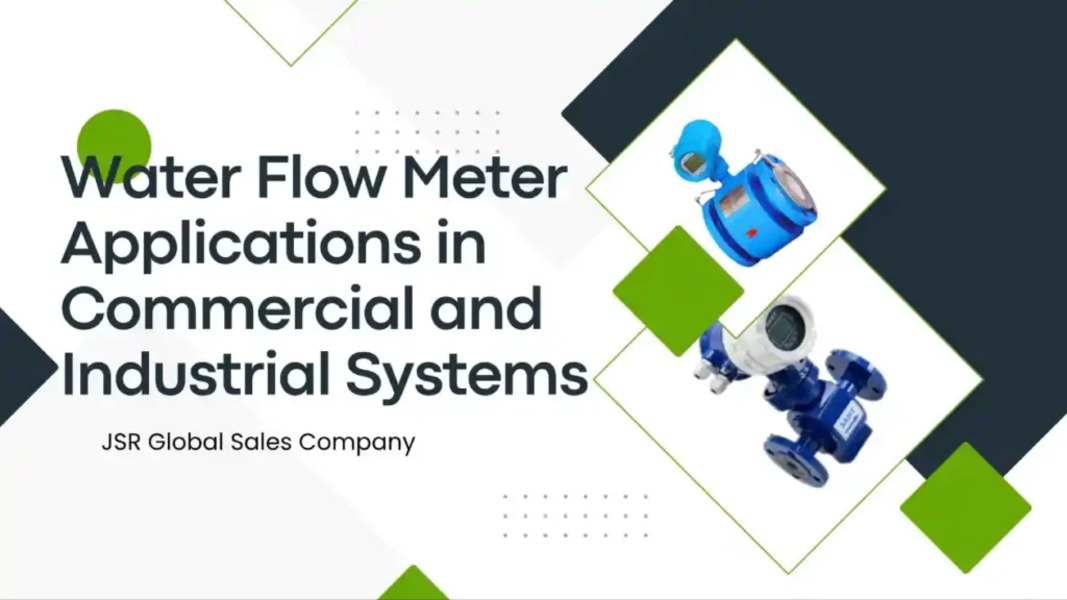
Water is an essential resource for commercial buildings, manufacturing facilities, HVAC installations and industrial processing plants. Managing water consumption efficiently is important for controlling operating costs, maintaining system performance and identifying potential wastage. This is where water flow meters in commercial and industrial systems play a vital role.
A water flow meter measures the volume or rate of water moving through a pipeline. By providing measurable flow data, it helps facility managers, engineers and plant operators monitor water usage, assess system performance and make informed operational decisions.
For businesses looking for dependable pipeline instrumentation, JSR Global Sales Company offers water flow meter solutions alongside a range of industrial valves, strainers and fluid-handling equipment.
What Is a Water Flow Meter?
A water flow meter is a measuring device installed in a pipeline to determine how much water passes through a particular point over a given period. Depending on the meter type, the measurement may be displayed through a mechanical dial or a digital interface.
Water flow meters are available in different designs to suit varying flow rates, pipe sizes, operating conditions and installation requirements. Common options include mechanical water meters, Woltman-type meters and electromagnetic flow meters.
Selecting the right meter depends on factors such as pipeline diameter, water quality, flow range, operating pressure, temperature and the accuracy required for the application.
Key Applications of Water Flow Meters in Commercial and Industrial Systems
1. HVAC Systems and Commercial Buildings
Heating, ventilation and air-conditioning systems use water to transfer heat and maintain comfortable indoor conditions. Commercial complexes, office buildings, hospitals, hotels and shopping centres often rely on chilled-water or hot-water circulation systems.
A water flow meter helps monitor circulation through these systems and supports the assessment of water distribution across different sections. Flow measurements can help facility teams identify unusual variations, investigate potential blockages and evaluate whether the system is operating as intended.
When integrated into an appropriate monitoring system, flow data can also support energy-management initiatives and planned maintenance.
2. Manufacturing and Process Industries
Manufacturing facilities use water for equipment cooling, production processes, washing and other operational activities. In these environments, uncontrolled or inconsistent water flow can affect production efficiency and resource consumption.
Installing a suitable industrial water flow meter enables operators to measure water supplied to specific processes, compare consumption between production areas and monitor variations over time. These insights can support process optimisation, resource planning and more effective maintenance.
Industries should select meters based on the actual process conditions, including required flow range, water characteristics and operating pressure.
3. Water Treatment Plants
Water treatment facilities need to measure flow at different stages of treatment, storage and distribution. Flow monitoring helps operators understand the quantity of water entering and leaving a process and assess the performance of individual treatment stages.
Water flow meters can be used in raw-water intake lines, treated-water outlets, filtration systems and distribution pipelines, depending on the meter's suitability.
Reliable measurements help maintain operational records, support process monitoring and improve visibility into water movement throughout the treatment system.
4. Cooling Towers and Industrial Cooling Systems
Cooling towers and industrial heat-exchange systems require controlled water circulation to support heat removal. Monitoring the flow of make-up water and circulation lines helps operators evaluate system behaviour and investigate changes in water demand.
A water flow meter can help identify abnormal consumption patterns and support maintenance checks when readings deviate from expected operating conditions. It should be selected according to the water quality, flow rate, pipe configuration and installation environment.
5. Commercial Plumbing and Water Distribution
Large residential complexes, hotels, hospitals, educational institutions and commercial facilities may have extensive water distribution networks. Measuring water flow at the main supply line or selected sub-lines provides visibility into overall consumption and usage by different areas.
Flow meters can help facility managers track consumption, review demand patterns and investigate unexplained increases in water usage. Where appropriate, separate metering points can also support internal consumption allocation and water-management reporting.
6. Food and Beverage Processing
Food and beverage facilities use water for ingredient preparation, equipment cleaning, rinsing, cooling and sanitation-related activities. Monitoring water flow helps production teams understand consumption across different operations.
The selected meter must be compatible with the application and any applicable hygiene, material and process requirements. For specialised process lines, engineers should verify the meter's construction, installation requirements and suitability for the water or liquid being measured.
7. Pharmaceutical and Chemical Industries
Pharmaceutical and chemical manufacturing facilities may require close monitoring of water used in utilities, cooling systems, cleaning operations and process support. Water flow measurements help operators maintain process records and identify unexpected changes in consumption.
The appropriate meter depends on the nature of the liquid, its conductivity where relevant, operating conditions and the level of measurement precision required. Applications involving treated or purified water may have additional material, validation and compliance requirements that must be evaluated before selection.
8. Utility Management and Water Conservation
Water conservation is a growing operational priority for industrial facilities and commercial property managers. Without adequate measurement, it can be difficult to identify where water is being consumed or whether usage has changed unexpectedly.
Water flow meters provide data that can be used to compare consumption across shifts, departments or operating periods. When combined with inspections, leak detection procedures and effective reporting, this information can help organisations identify opportunities to reduce unnecessary water use.
Benefits of Installing Water Flow Meters
A properly selected and installed water flow meter can deliver several operational benefits:
Improved water-use visibility: Measure water consumption at key points in a pipeline network.
Better operational control: Identify variations in flow and investigate possible system issues.
Support for cost management: Use consumption data to identify opportunities to reduce water wastage.
Planned maintenance: Track unusual readings that may warrant inspection or maintenance.
Process monitoring: Compare flow measurements against expected operating requirements.
Data-led decision-making: Support water-management reports, resource planning and system optimisation.
Actual benefits depend on the meter type, installation quality, calibration, operating conditions and how the collected data is used.
How to Choose the Right Water Flow Meter in Gurugram
Choosing the right water flow meter is essential for reliable measurements and long-term performance. Before purchasing a meter for a commercial or industrial system, consider the following factors.
1. Pipeline size: Select a meter compatible with the actual pipe diameter and connection arrangement.
2. Flow range: Confirm the expected minimum, normal and maximum flow rates to ensure the meter can measure the required range.
3. Meter technology: Mechanical, Woltman-type and electromagnetic meters serve different applications. Electromagnetic meters generally require electrically conductive liquids, while mechanical meter selection depends on the design and operating conditions.
4. Material compatibility: Consider whether the meter's wetted materials are suitable for the water quality, temperature and application.
5. Operating pressure and temperature: Verify that the meter's rated limits match the system requirements.
6. Display and data requirements: Decide whether an analogue reading is sufficient or whether digital output and integration with a monitoring system are needed.
7. Installation conditions: Follow the manufacturer's instructions for orientation, straight pipe lengths, upstream disturbances and maintenance access. Incorrect installation can affect measurement performance.
Consult a qualified supplier or engineer if the application has demanding operating conditions or requires a specific level of measurement accuracy.
Why Choose JSR Global Sales Company for Water Flow Meter Solutions?
JSR Global Sales Company supplies pipeline equipment for commercial and industrial fluid-handling applications. Its product range includes water flow meters, Woltman-type water meters, valves, strainers, expansion tanks and other pipeline accessories.
The company's listed Woltman water meter is intended for industrial use, with a cast-iron construction. The appropriate model and configuration should be confirmed against the required pipe size, flow range and operating conditions.
When evaluating a water flow meter, businesses should share their application details, pipeline specifications and measurement requirements to help identify a suitable solution.
To learn more, visit the JSR Global Sales Company website or explore its water flow meter product information.
Conclusion
Water flow meters are important components of commercial and industrial water-management systems. From HVAC installations and manufacturing plants to water treatment, cooling systems and commercial buildings, they provide valuable measurements that support better resource management and operational oversight.
Selecting the right meter requires careful consideration of pipeline size, flow rate, operating conditions, material compatibility and measurement requirements. With a suitable water flow meter and proper installation, organisations can improve visibility into water consumption and make better-informed decisions about their fluid systems.
Looking for a water flow meter for your commercial or industrial application? Contact JSR Global Sales Company to discuss your pipeline requirements and explore suitable water flow meter options.


